
Rich in story-telling, light on concept
Review by Jim Warrington
We attended, with great anticipation, the well-reviewed Zürich Ring, in the making since 2018. Zürich is the city where Richard Wagner wrote the libretto and much of the music for Das Ring des Nibelungen while in exile. He lived there for 10 years, between 1849 and 1858.
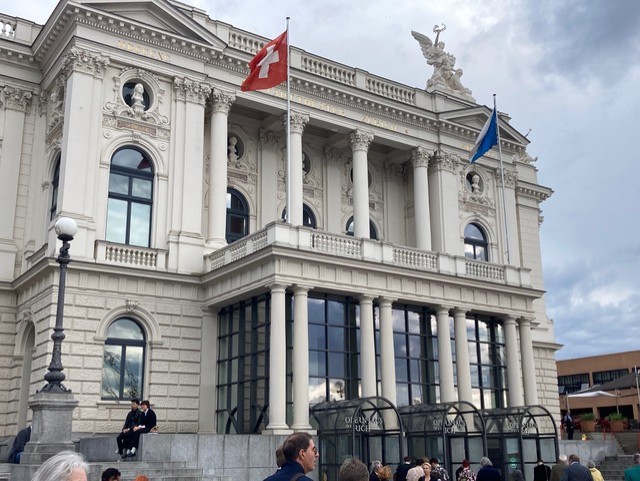
The Zürich Opernhaus is a smaller than average theatre, and would be a challenge for any team mounting the Ring. The pit holds just over 80 musicians. Audience size is only 1200, in a traditional, tiered structure with some sightline issues. The economics to mount a Ring require an enthusiastic, well-heeled local supporter base, as well.
Undaunted, music director Gianandrea Noseda and director Andreas Homoki took it on, and gave us a very satisfying, if at times, perplexing production. The lead performances, the acting and the richness of the orchestra sound made this truly memorable.
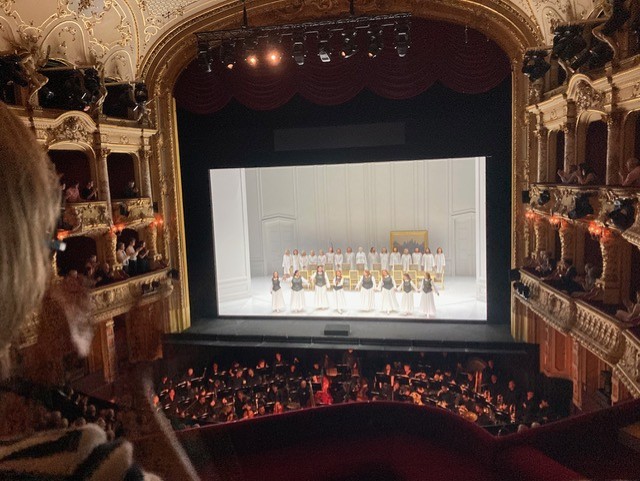
Did that make up for the odd set design and staging? Pretty much, to this relatively unsophisticated Ring Nut. I just ignored the gray walls, conference room furniture configurations and opening/closing doors after a while. I was too engaged in the music and in the, by and large, outstanding singing. I’ve narrowed down my best memories to a Top Ten list.
Top Ten List of what worked
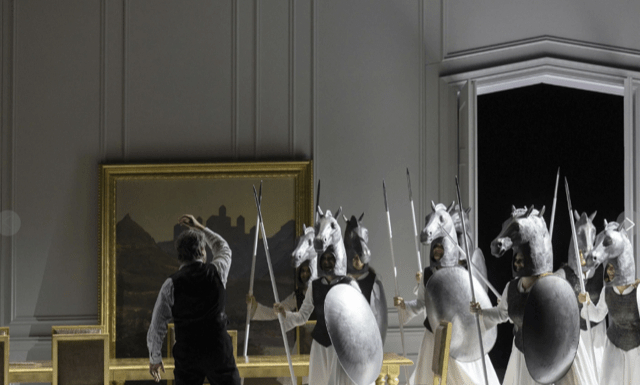
10. The Valkyries – from the moment they entered, horse heads and all, they were powerful and united warriors. Their costumes, well-directed stage presence and vocal power made them a joy to hear and watch. Note to selves: keep an eye out for more from Canadian Sarah Cambidge who sang Helmwige.
9. Musical direction – Maestro Noseda led a structured and curated reading of the score. There were many lyrical, Italianesque moments to match the unfolding, emotional story on stage. There were powerful, bright instances of drama to accentuate fear and foreboding. It’s hard to believe that this was an orchestra 60% of the usual size for the Ring. I missed some of the usual depth, especially in the strings. But the overall warmth of the sound was more than enough compensation.
8. Lighting – One of the ways to make endless rotating gray walls interesting is to use lighting colour and tone to support the story. I give Mr. Homoki’s lighting director, Franck Evin, full credit for maintaining some visual interest.
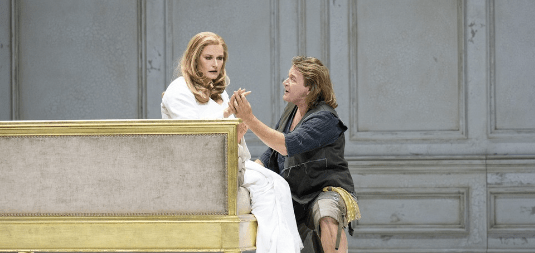
7. Siegfried – Klaus Florian Vogt is an unexpected Siegfried. His lyrical style, his youthful appearance, his acting and his even-keeled vocal “output” were not the usual stuff of the heavy, powerful Siegfrieds we have known. But it worked, in my view. He commanded the stage at the right times and did a great job of story-telling through his characterization.

6. Costumes – Costume design was a delight; from the svelte pyjamas of the Rhinemaidens to the hairy coat of Hundig to the dark, menacing. robes of Hagen,
it all worked. Costumes subtly added to role characterizations in a way that was noticeable and appealing.
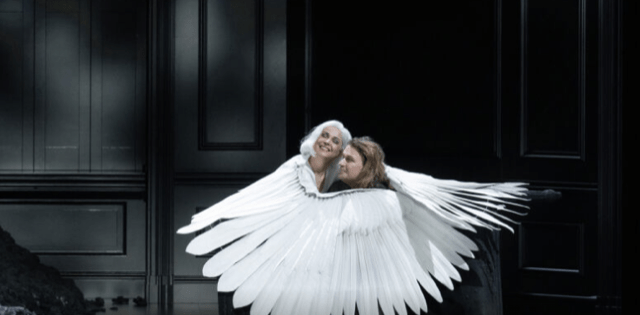
5. Brünnhilde – Brünnhilde can present her character’s strengths and determination through vocal fireworks (think Jane Eaglen), dramatic, over-the-top acting (think Irene Theorin) or both. Camilla Nylund’s acting and solid, unwavering vocal sound made her interpretation one of the most engaging I have seen or heard. Did she raise the roof? Yes, a couple of times, most notably in her Starke Scheite near the end. Throughout, just solid singing and dramatic presence.
4. The Rhinemaidens – they were just so much fun! Marilyn Monroe wannabes that were mischievous and playful, in perfect harmony vocally, and a joy to watch.
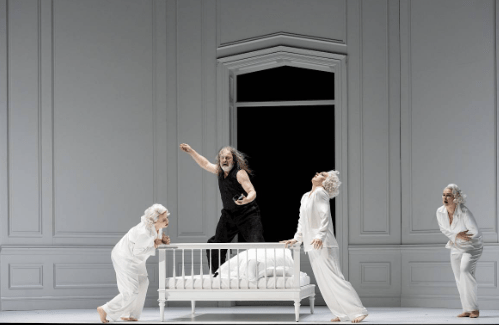
3. Siegmund – Eric Cutler’s towering presence and strong, nuanced vocal interpretation made him a stand-out, in my mind. Often, Siegmund ends up being a one-trick wonder with Winterstürme. Mr. Cutler put his arms around the full role and gave it the importance it deserves.
2. Evil guys – What can we say about David Leigh’s Hagen? He owned the stage through his powerful, menacing bass. His acting interpretation was both furtive and commanding. Christopher Purves is rightfully called the Alberich of our day; forceful, nasty and very strong singing. And the Mime of Wolfgang Ablinger-Sperrhacke is legendary as well; fussy, sneaky and passionately sung.
1. Wotan – Tomasz Konieczny is the best Wotan I have ever seen. His anger, sadness, pride, hope and disappointment all shone through, and his voice floated over the music from the pit with ease and beauty. He doesn’t just sing this role, it’s his second skin. I would travel far to see him in another Ring any time.
Five things that didn’t work
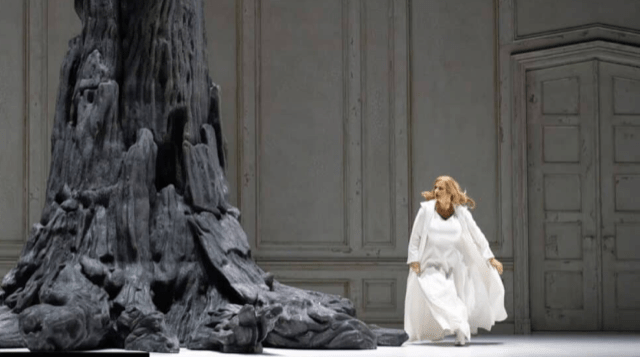
5. Set – The rotating wall concept wore thin after Rheingold. Despite the director’s effort to keep visual interest (strewn furniture, ash tree appearances, lighting shifts for example), it was a bore. At least it left the story-telling to the cast and orchestra.
4. Valhalla burning up at the end of Gotterdammerung – rather than mount a memorable ending, the director let an off-stage orange light and a Valhalla picture fire do the talking. It did not match the power of the music or the intention of this scene in the whole story.
3. Rock and magic fire in Die Walküre– c’mon, orange halogen lights flickering INSIDE Brünnhilde’s rock? No barrier there!
2. Valkyrie battle scene in Die Walküre– men in nighties with kindergarten play swords – really? It looked like a video game rehearsal, I’m afraid.
1. Abstract vs. realistic staging – it seems as though the creative team couldn’t decide on a staging concept, so they opted for the occasional realistic feature – ash tree, dragon, rock and tree stump forest are examples that come to mind. Video projections might have been better, who knows?
My bottom line? I strongly recommend this production for the story-telling power of the singers and the music. You can see it for yourself, free on the Zürich Opernhaus site until June 15th.
 Toronto Wagner Society